

The latest buzzword that companies are starting to spend a lot of money on (no, I don't mean state-owned companies) is customer experience. Yet handling an errand or making a purchase could be an experience without any extra spending. A little more humanity, kindness and attention would be enough.
Toward me, the customer, the buyer. I attended another talk.
Surveys confirm that a third of consumers will walk away forever from a given brand after just one bad experience.
At the same time, almost half of consumers would be willing to pay up to 20% more for the same service if it made a deeper impression on them.
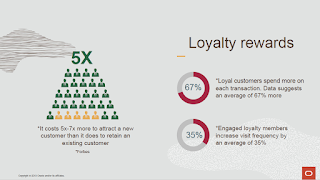
The sales culture that has taken root in our small country is primarily sales-oriented. Let's acquire as many new customers as possible and try to sell as many products as possible this way, whatever it takes to hit the plan. Yet surveys prove that acquiring a new customer costs at least five times as much as retaining an old one.
Even if that means trying to understand their needs and providing a more personalized service.
What's more, a loyal and satisfied customer spends more (with us) every single time. The data shows 67% more.
All of this, of course, already leads to explosive results even in the short term.
Just to talk about the practical side of things, one of our most important business partners, Gergely Molnár, CRM manager at Raiffeisen Bank, presented how all this happens at their organization, in the banking sector.
(I almost wrote "at ours," since I personally started developing the data market that forms the basis of the whole process more than 10 years ago :-).
Well, customer relationship management (CRM) is a very far-reaching thing. We're trying everything already, just so the customer buys whatever we want to sell them. Of course, the noise is getting louder and louder, because every competitor is trying the same thing:
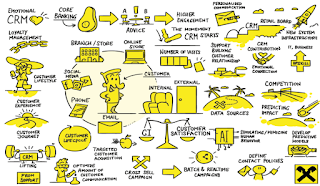
What we can do is try to gather (integrate) our data into one place.
Then let's bring our business processes in line with our data, so we're able to see what the customer is doing, where they are going, and what they are up to. But the best thing is if you can figure out, based on the behavior of other customers, what they want to do.
Offer a solution, get feedback, and refine the system.
As I see it, the technology is available and it's not even expensive. There are better and better software solutions, which keep getting even better.
However, things are a big mess when it comes to data. Everything that's alive and moving also changes. This is especially true of business processes and of the ever more beautiful software.
Data, however, is eternal. And if we don't structure our data, not just once, within the scope of a single project or tender, but continuously, we won't be able to observe our customers, map out their needs, and retain them in the long run.
And do all this while getting better and better ourselves.