

I have no idea where global warming will end up. Will the ocean swallow coastal cities? Will the ice at the poles disappear? Will the Gulf Stream stop? Will all the rainforests be cut down?
One thing is certain: Excel is eternal and will stay with us forever!
If I had invented Excel, I wouldn't just be rich — I'd also be proud of how much I helped ease the difficulties stemming from the lack of systems-level thinking that our education system so thoroughly fails to address. I tried to phrase that diplomatically, apologies.
Countless IT companies develop countless systems, employing armies of consultants for enormous sums of (dollar) millions, across countries and around the world, in order to organize, manage, and display the data and information generated during daily workflows — but this changes nothing about the essence of things.
I'd sum up the situation briefly like this: everything is an Excel table. Eradicating Excel tables is just as hopeless and futile a battle as reducing greenhouse gas emissions.
Let's take a look at how emissions have evolved over the past decades:
- List item
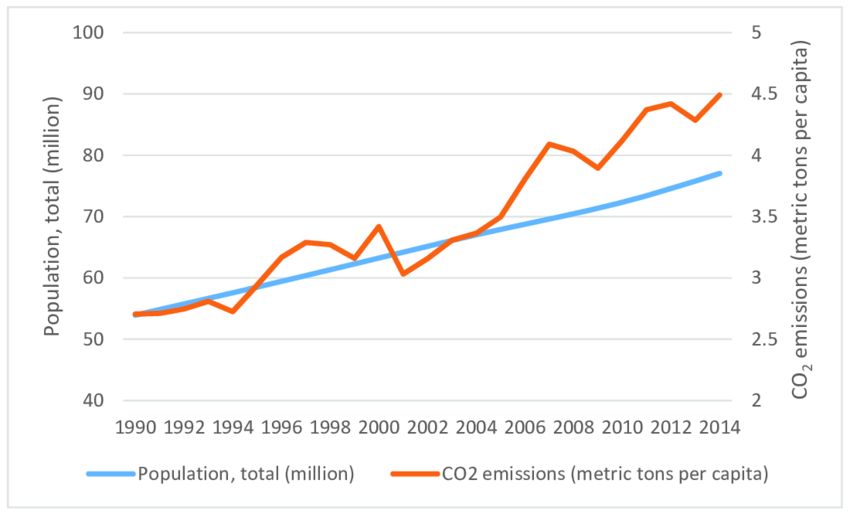
Well, the number of Excel tables is growing just as steadily. That's for sure. Not the climate agreement, not the UN, not the EU, not Mark Zuckerberg, Jeff Bezos, Elon Musk, or even Chuck Norris can change that. Not even all of them together.
We rolled out SAP and it's missing some thingamajig? Let's export the data into an Excel sheet, and put it there next to it! Weekly. Daily. Twice a day.
We rolled out the brand-new project management software, but the top-priority tasks aren't highlighted in red on the background? Let's export the list to Excel, color in the cells, and send it around to everyone by email before the weekly status meeting!
Incoming mail has to be logged, but the logging program can't record the contact person linked to the sender if it's a company? Let's make an Excel table! There you just have to insert one column. The address data will be dumped in redundantly, but that's fine. The intern will fix it later.
Want a raise? Learn the VLOOKUP function and spread its use around the company! Right away you'll need three fewer people in your department. And who do we have to thank for that? Who indeed?
Can you program macros? Do you know what Visual Basic is? Seriously? Why didn't you say so before? Your job will be guaranteed all the way to retirement.
I think Excel has its place and role. I also use it myself, for example for generating bulk commands.
What I don't understand, though, is: if a company spends so much money, so many resources, so many people on architecture, software, and consultants, then why is Excel still the most important application, now and forever?