


The year 2020 completely overturned the rules of working. "Home office" is no longer just a privilege for a lucky few, but has increasingly become the norm. However, it wasn't just our work schedule and workday that became completely different - how and why we learn changed as well.
All these changes, of course, also resulted in high turnover, so there will be an increasing need for trained employees. Yet, according to a survey by the British consulting firm Kallidus, in 2020 25% of employees received no (!) internal training whatsoever.
The survey questioned 1,033 British employees from various industries, whether in the public or the private sector. I believe the result is more than instructive.
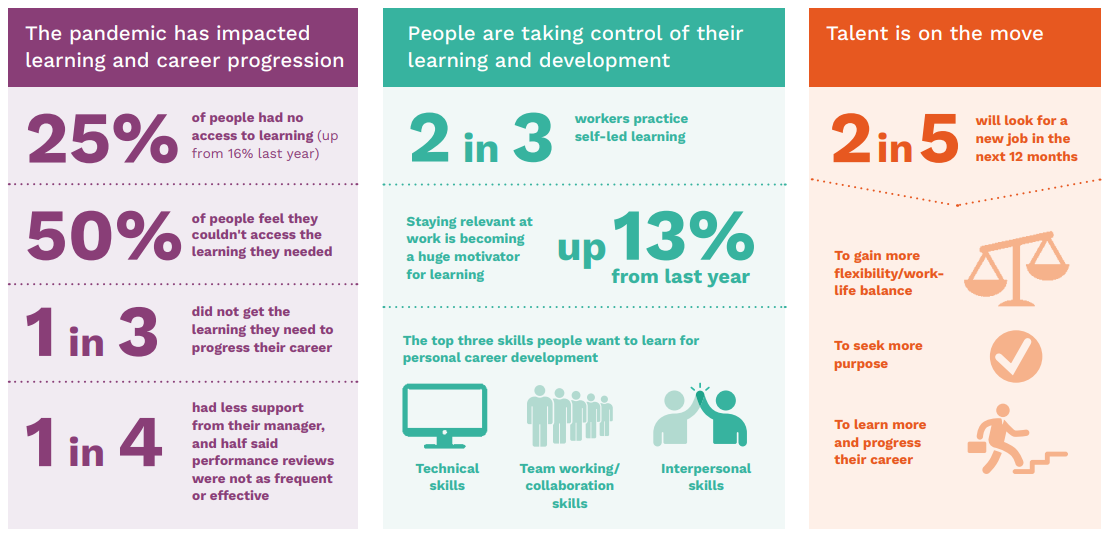
Beyond the fact that one in every four workers was left out of training opportunities (almost double the 2019 figure), only every second one feels they received as much training from their employer as they needed.
Because of the above, one in three workers feels stuck in their career, and every fourth participant reported that the lack of support from their manager seriously affects their performance.
What motivates people to learn at work?
Interestingly - mainly due to COVID - people started feeling less secure about their jobs and their acquired positions, so keeping them became the primary motivation for learning.
According to the survey, although salary increases and workplace promotion as motivating factors also doubled, they are still only the second most important factor in acquiring new skills.
While women (42%) prefer classroom instruction more than men (35%), the preference for digital learning has seen a massive rise.
Beyond the fact that one in every four workers was left out of training opportunities (almost double the 2019 figure), only every second one feels they received as much training from their employer as they needed.
Because of the above, one in three workers feels stuck in their career, and every fourth participant reported that the lack of support from their manager seriously affects their performance.
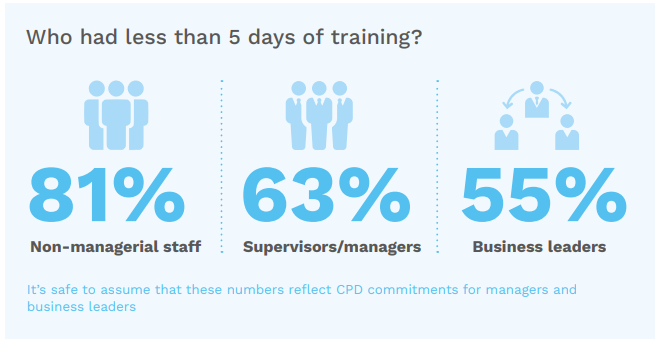
Unfortunately, internal training and support for individual development most often falls into the "nice to have" category, although it is clear that a more highly and better trained employee is capable of generating more revenue. Despite this simple truth, 81% of non-managers were only able to attend fewer than 5 days of training in the past 12 months.
Finally, let me summarize the lessons from the survey:
1. Internal training will change
Because of the transformed work schedule, we need to give every employee greater freedom and support so they have the time and opportunity to learn, whether individually, in groups, or self-organized. This intention must be communicated continuously.
2. Focus on building a learning-centered corporate culture
Numerous studies show a close correlation between knowledge sharing, a learning-centered internal culture, and workplace satisfaction, engagement, growth, and performance. If you encourage learning, your investment will pay off quickly.
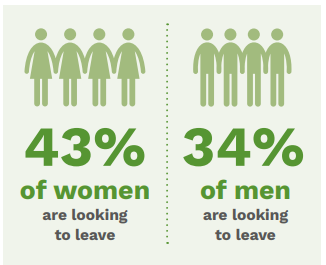
3. If you support learning, you'll be more successful in retaining female employees
According to Microsoft research, 71% of workers in the United Kingdom said flexible working arrangements should remain even after COVID. This is particularly important for mothers with children, who are most at risk during layoffs. Moreover, if you allow them to learn and develop within flexible working hours as well, you can count on greater loyalty from them.
4. Be creative
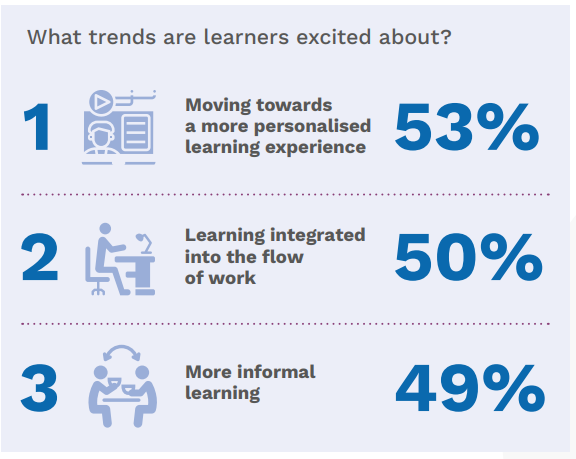
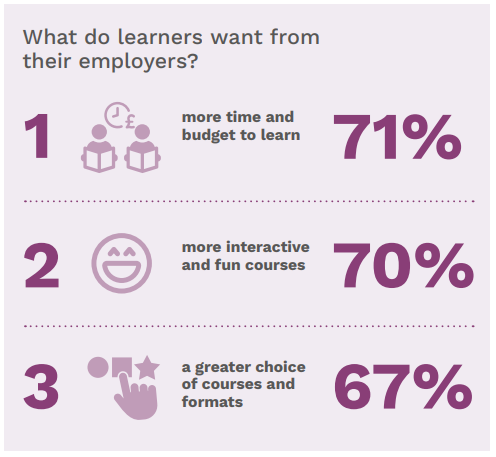
Participants get tired of learning quickly, especially if the format and presentation style are boring. Survey respondents most preferred video content (71%), closely followed by e-learning (70%). At the same time, it cannot be stressed enough that the more professional these training materials are, the more effective the knowledge transfer will be.
5. Training and courses shouldn't just be a way to pass the time
Employees would like companies to devote much more time and money to their training, while also expecting much more support from their superiors. Technical knowledge remains very important, but developing "soft skills" is at least as important, especially in rapidly changing (workplace) circumstances.